Main Objective
Launch a fast, free and reliable reference that people come back to.


A custom-built flag reference platform for a UK business serving students, educators and flag enthusiasts. CodeCrackers designed the database, page templates and download system behind hundreds of flags, country codes and histories. The result is fast, free and easy for a small team to manage.
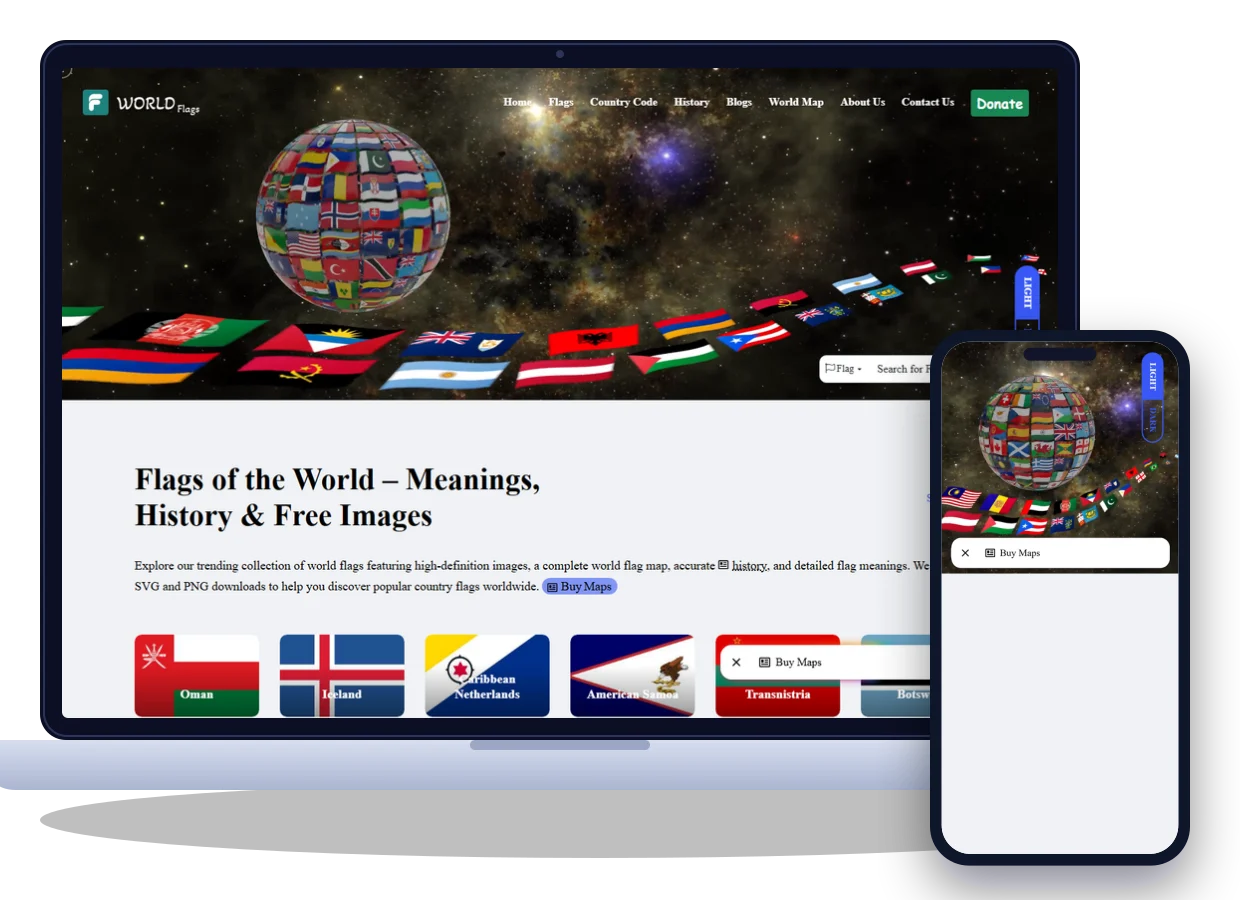
AllWorldFlags is a free online reference for flags, run by the UK business Pictoom. It covers independent countries, dependent territories, US states, international organisations and emblems. It also offers country codes, flag histories and free SVG and PNG downloads.
The team wanted a site that students, educators, researchers and flag enthusiasts could rely on. Hundreds of flags, each linked to codes, history and downloadable files, were too much for a standard blog-style CMS. They needed a custom platform built around their data.
Launch a fast, free and reliable reference that people come back to.
Strong organic traffic, returning visitors and pages indexed quickly.
The idea was simple, but building it well meant solving four connected problems. Each one would have made the others harder.
Hundreds of flags across countries, territories, US states and organisations each needed images, codes, meanings and history.
Off-the-shelf tools couldn't handle the data.
Every flag needed crisp SVG and PNG versions for download, which can slow pages if not handled carefully.
Speed was at risk.
Established flag sites already ranked for most searches, so a new site needed clean structure and fast pages to compete.
New sites are easy to overlook.
As a free resource funded by ads and donations, the platform had to be cheap to run and easy for a small team to update.
The budget left no room for waste.
What the client wanted to achieve: a fast, free and well-organised reference for every flag: easy to search, easy to download from and easy for a small team to keep growing.
Before designing anything, we mapped the content, studied established flag sites and looked at how people search for flags.
We mapped every type of content the site needed (flags, country codes, history, blog posts and downloads) and how they connect.
We studied established flag and geography sites: how they organised content and offered downloads, and where they felt slow or cluttered.
We mapped four groups: students doing homework, teachers building lessons, researchers checking facts and enthusiasts browsing for fun.
A custom platform built around the data would be faster, cleaner and cheaper to run than bending a standard CMS to fit.
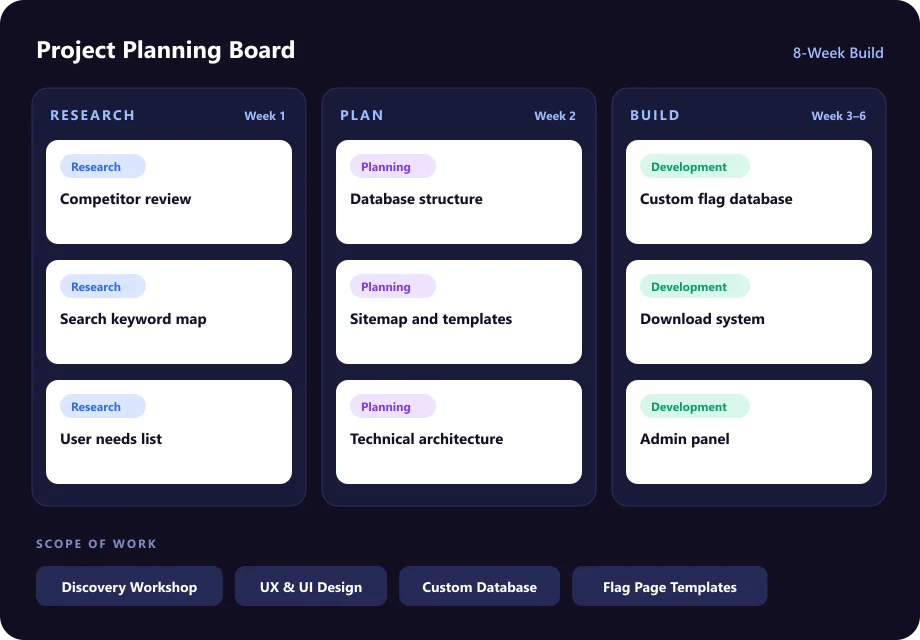
A structured eight-week approach kept every stage transparent and on time. Select a stage to see what happened.
We started with workshops on the audience and the content. We also looked at how ads and donations would fund the site while keeping it free to use.
Drag the handle to compare the early concept with the finished platform.
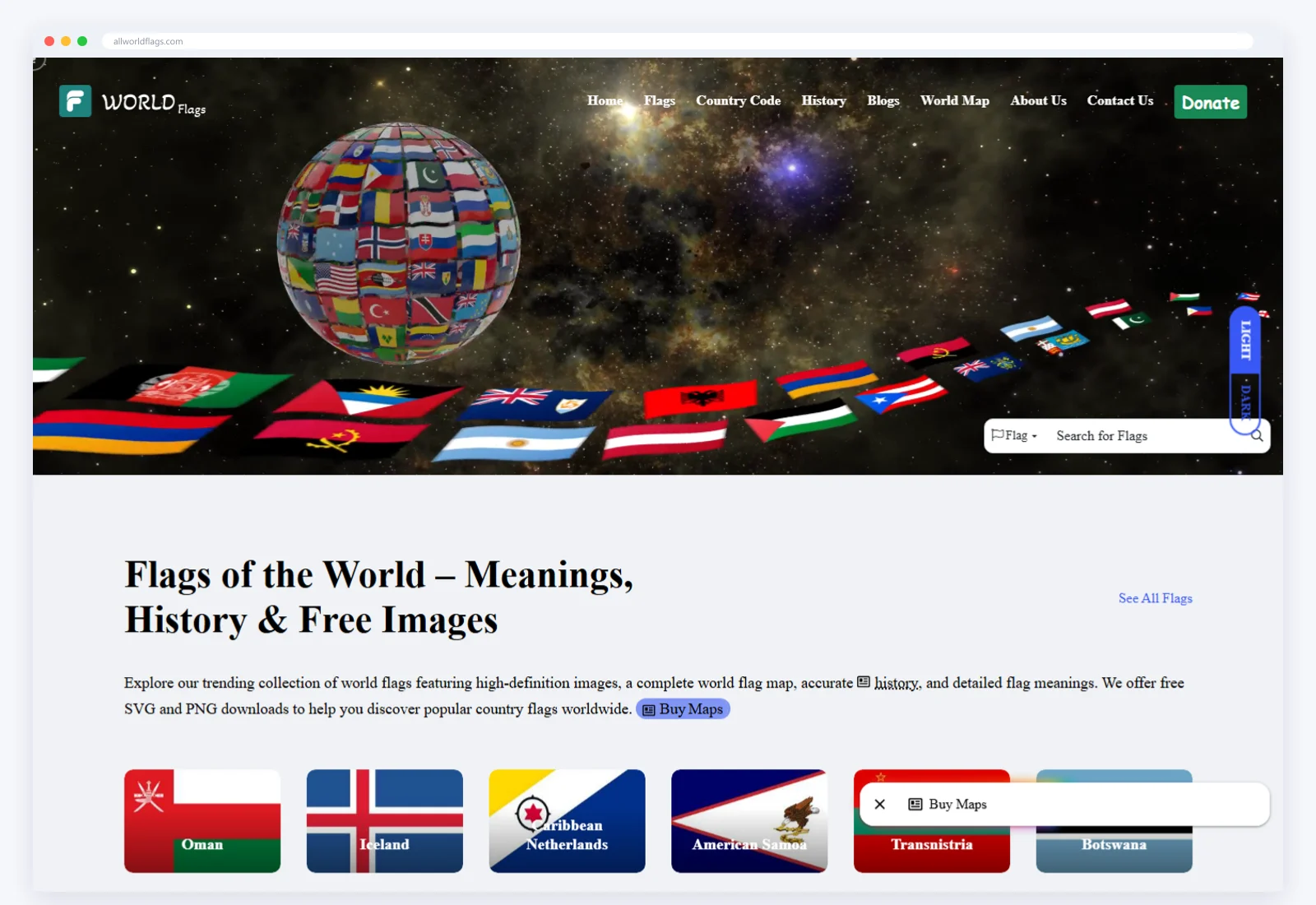
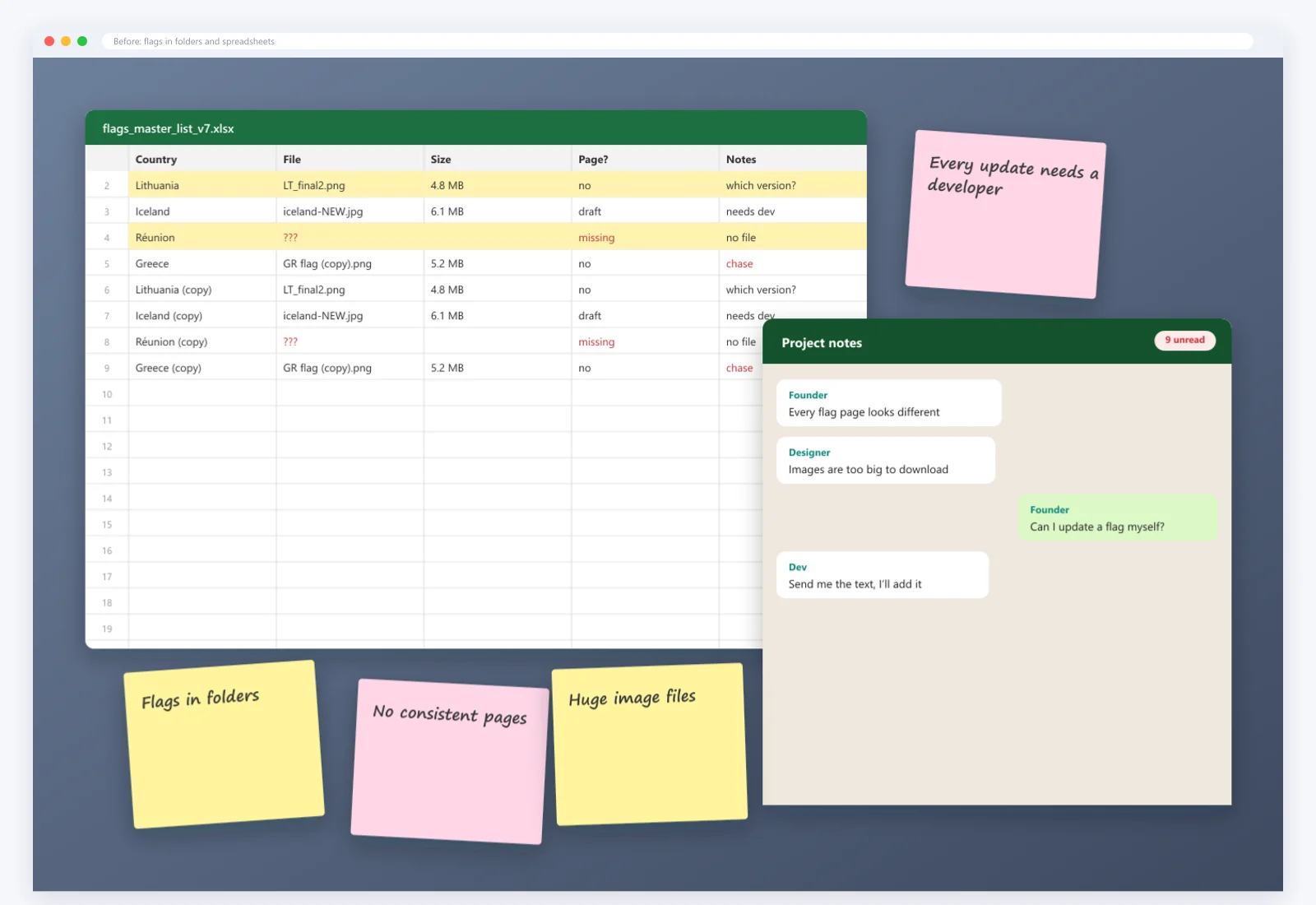
The “before” view is an illustration of the early concept. The “after” view is the live website.
Four connected workstreams, each one solving a specific part of the challenge.
We designed a custom database for flags, country codes and history, with categories for countries, territories, US states, organisations and emblems. Every page is generated from the same structured data.
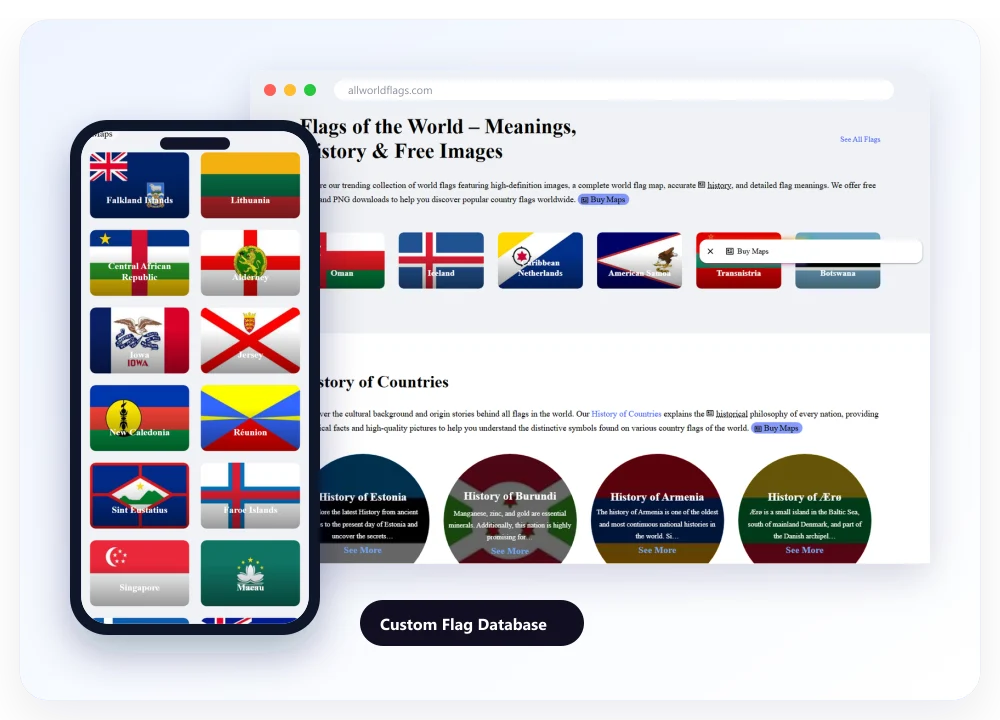
Each flag has crisp SVG and PNG files ready to download, while pages show lightweight previews. The site stays fast however many flags a visitor browses.
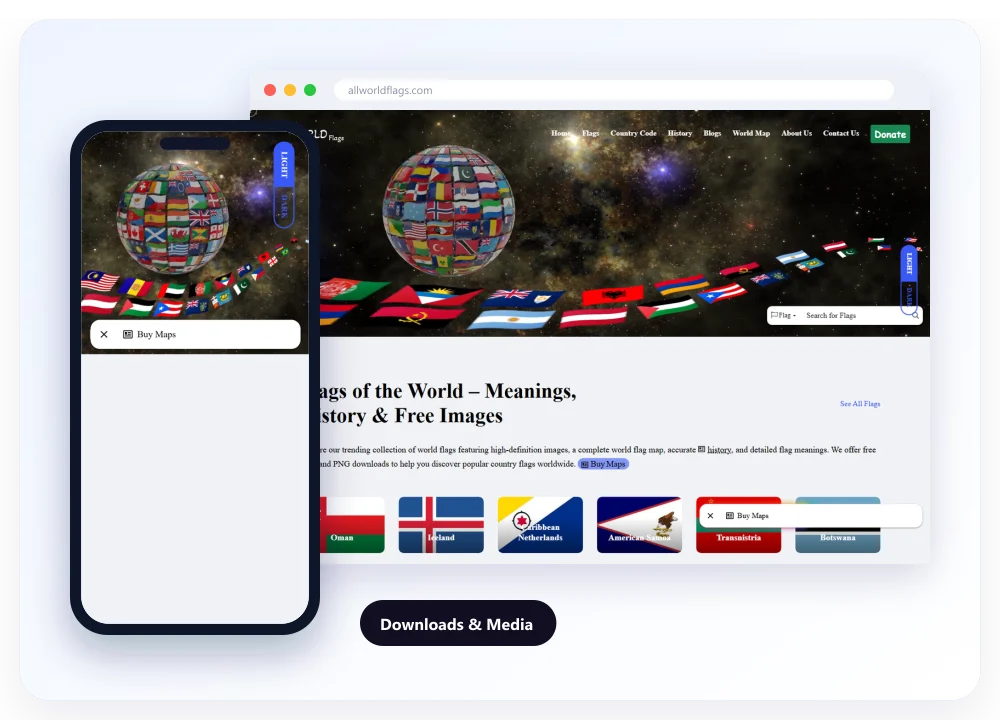
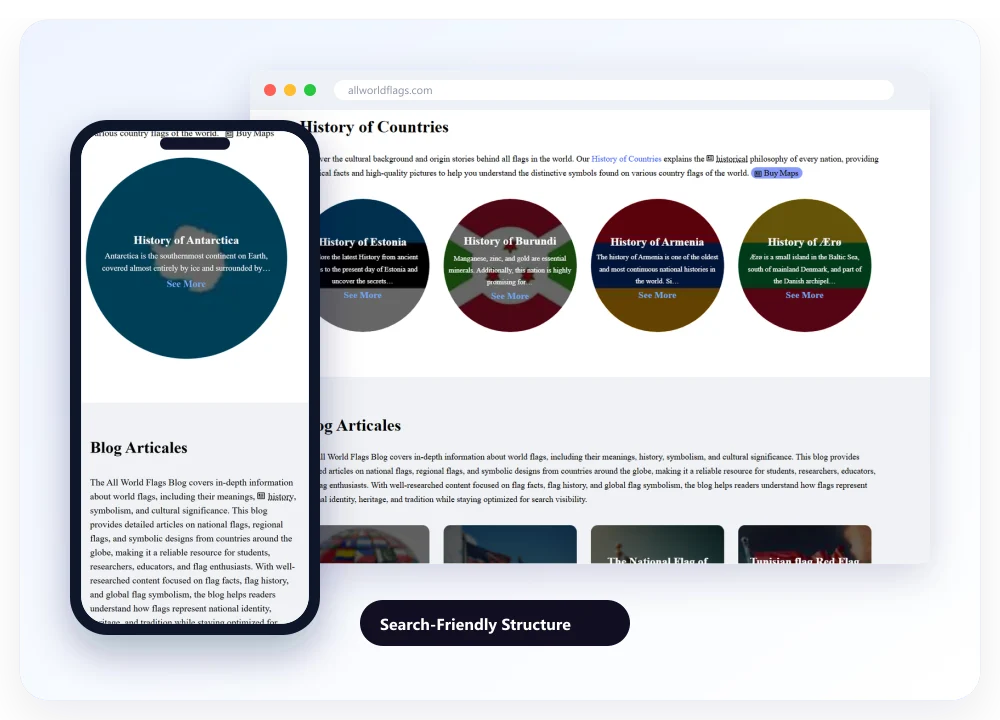
Clean URLs, consistent templates and structured headings help search engines understand every page. Links between flags, codes and history pages do the same.
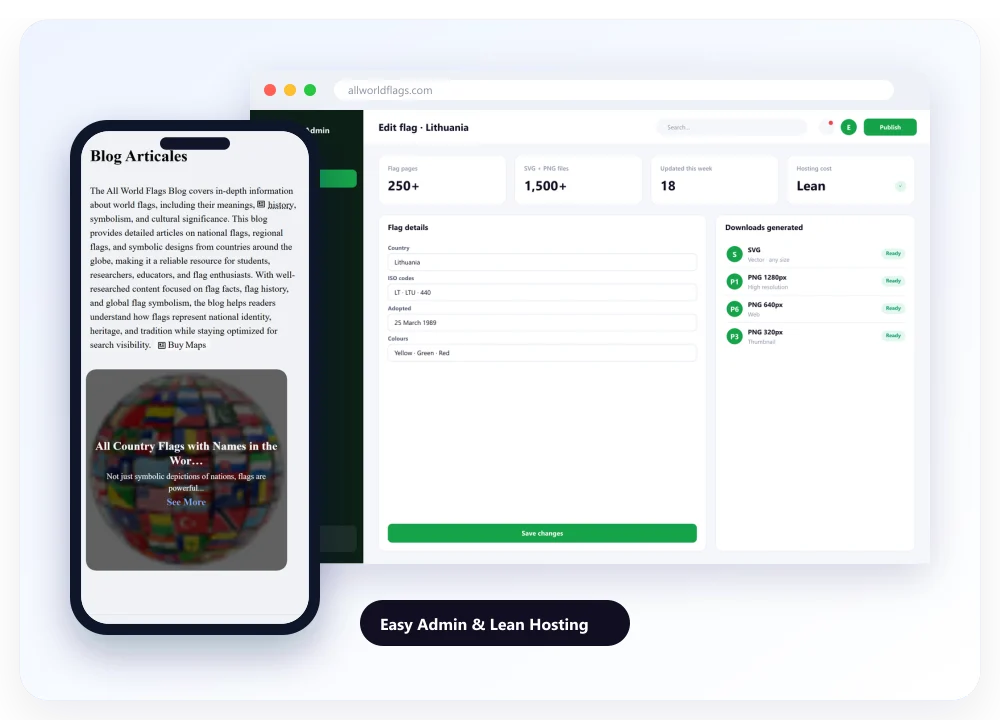
A custom admin area with a text editor lets the team add flags, history and blog posts without a developer. Lightweight hosting keeps costs low, while ads and a Stripe donation page help fund the site.
The finished platform on desktop and mobile, with flag categories, downloads, the world map, and light and dark modes.
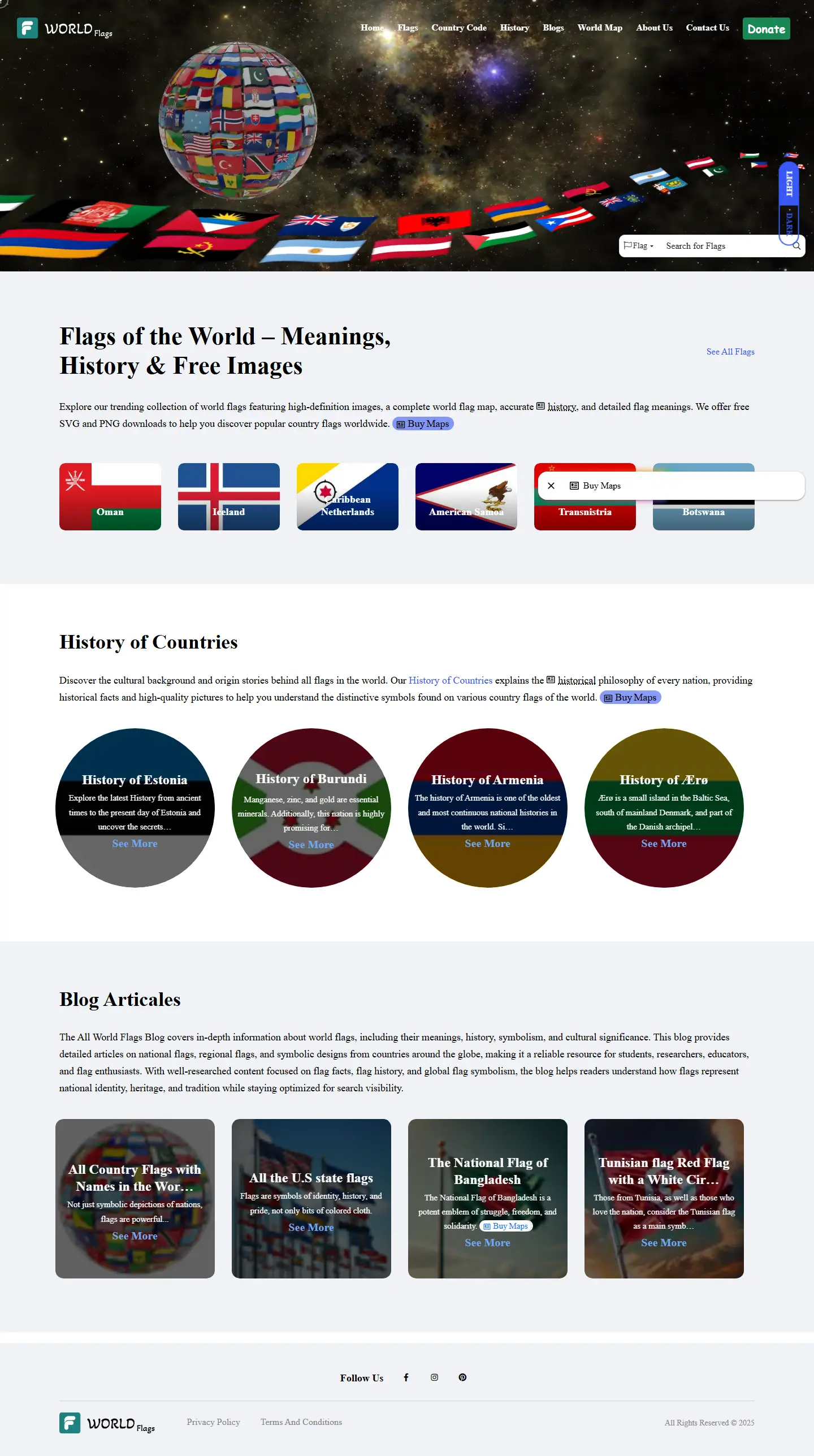
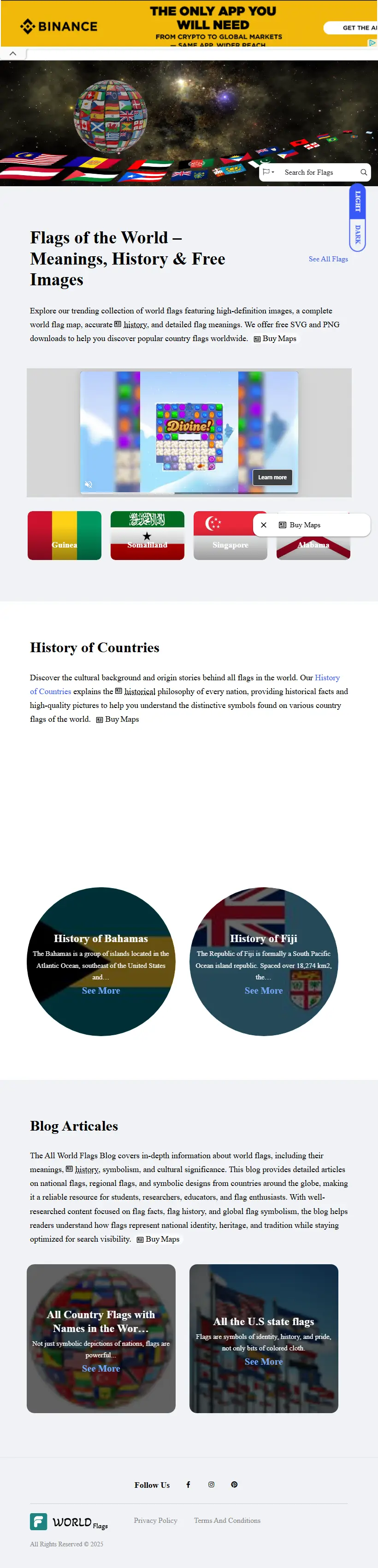

Hover over a screen and scroll to explore the website. Open allworldflags.com
Measured results in the first six months after launch.
The share of visitors arriving from Google within six months.
Students and teachers coming back for more flags and facts.
Flag, code and history pages indexed by Google within three months.
Building around the data paid off. Clean templates helped search engines index the site quickly, fast pages kept visitors browsing, and free downloads gave students and teachers a reason to come back.
“We had a clear idea, but no off-the-shelf tool could handle it. CodeCrackers built a platform around our flags and data, and it's fast, clean and easy for us to update. Students and teachers keep coming back, which is exactly what we wanted.”

A lead-focused WordPress rebuild for a London air conditioning and refrigeration specialist. We reorganised their services, rebuilt the site for mobile and speed, and put WhatsApp and click-to-call on every page. More local searches now turn into booked jobs.
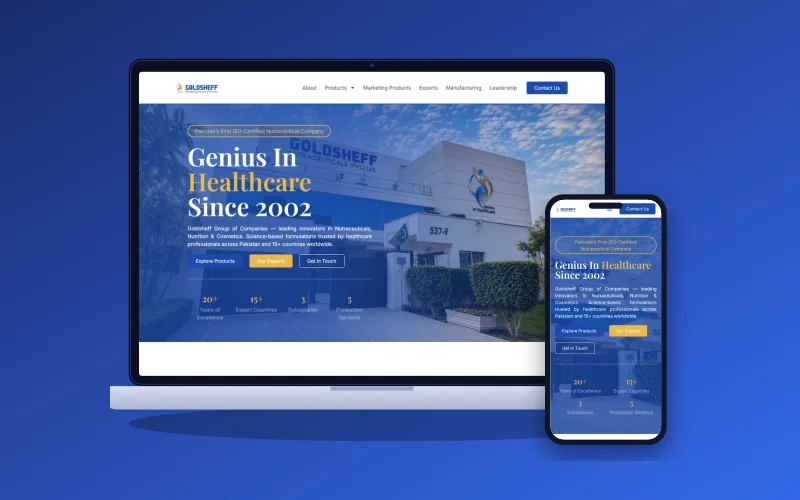
Ongoing WordPress maintenance for a Lahore nutraceutical manufacturer serving export buyers worldwide. CodeCrackers took over a website no one was looking after and made it secure and fast. Every month since, we've kept it updated, backed up and monitored.

A full website redesign for a UK accountancy practice. We replaced unclear, unfinished pages with dedicated service pages, plain-English content and clear contact routes. Sole traders, contractors and limited companies can now see exactly how the firm helps.


