Main Objective
Connect every system so trade orders flow automatically from retailer to dispatch.


CodeCrackers built a secure trade API for a UK wholesale distributor and connected its warehouse, Xero and courier systems. Retailers now place orders and check live stock automatically. Orders flow from checkout to dispatch without anyone re-keying a single line.

The client is a UK wholesale distributor of health and beauty products, supplying more than 300 independent shops, salons and online sellers. Its 20-person team runs a warehouse in the West Midlands and dispatches orders across the UK every day.
Almost every order arrived by email or spreadsheet and was typed into the warehouse system by hand. Stock levels went out in weekly spreadsheets, and nothing was connected to Xero or the couriers. The directors asked CodeCrackers to connect everything so orders could flow automatically.
Connect every system so trade orders flow automatically from retailer to dispatch.
More automated orders, fewer errors and faster dispatch.
The business had a strong product range and loyal retailers, but four connected problems were slowing every order down. Each one made the others worse.
Retailers sent orders by email and spreadsheet, and the team typed every line into the warehouse system.
Slow processing and keying errors.
Retailers' websites showed stock from weekly spreadsheets, so they sold items the distributor no longer had.
Cancelled orders and frustrated retailers.
The warehouse system, Xero and the courier accounts didn't talk to each other, so data was copied between them by hand.
Hours of double entry every day.
Retailers emailed for tracking numbers and invoices, and staff looked them up and sent them one by one.
Constant “where's my order?” emails.
What the client wanted to achieve: one connected set of systems where retailers order and check stock automatically and orders go straight to the warehouse. Tracking and invoices would go back to retailers without anyone lifting a finger.
Before writing any code, we mapped every system the business used and traced how a single order moved between them.
We reviewed the warehouse system, Xero, the courier accounts and retailers' platforms, checking what each API could and couldn't do.
We spoke with retailers of different sizes to learn which platforms they used and how they wanted to order.
We mapped every field, from product codes and prices to delivery addresses, so data would move cleanly between systems.
With one central API and integration layer, each system only needed to connect once, instead of relying on fragile links between every pair.

A structured nine-week approach kept every stage transparent and on time. Select a stage to see what happened.
We started by mapping every system the business used and following real orders from email to dispatch. We then agreed the priorities with the directors.
Drag the handle to compare how orders were handled before and after the integration.

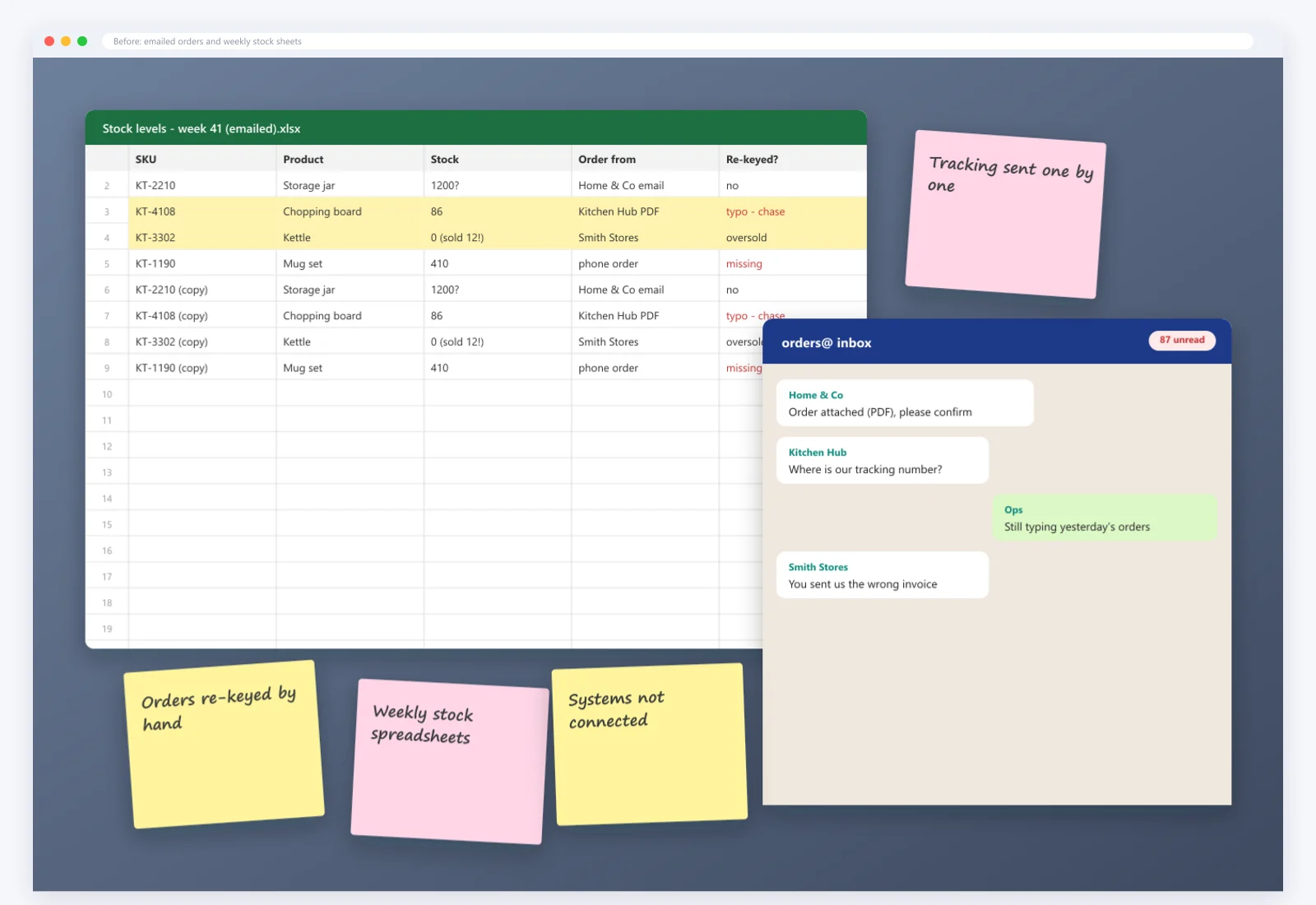
Both views are illustrations: the “before” shows the old way of working, the “after” shows the new system. Client data is not shown.
Four connected workstreams, each one solving a specific part of the challenge.
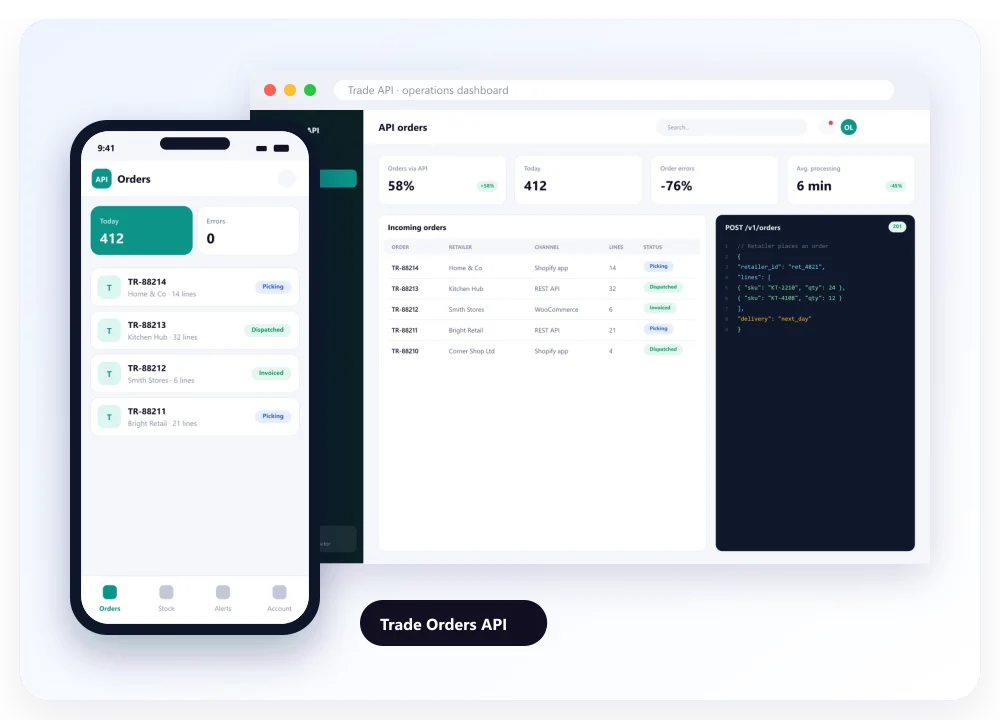
A secure REST API lets retailers' systems place orders directly, each with its own access key. Ready-made Shopify and WooCommerce connectors mean smaller retailers can connect without a developer.
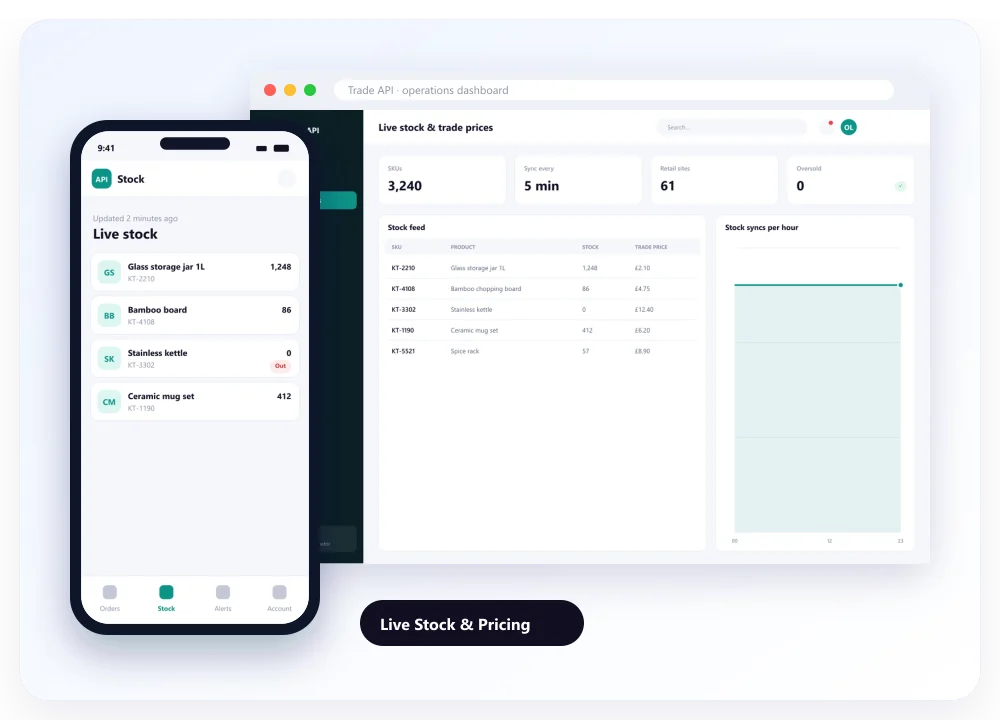
Stock and trade prices update from the warehouse system every few minutes. Retailers' websites pull them automatically, so retailers only sell what's actually on the shelf.
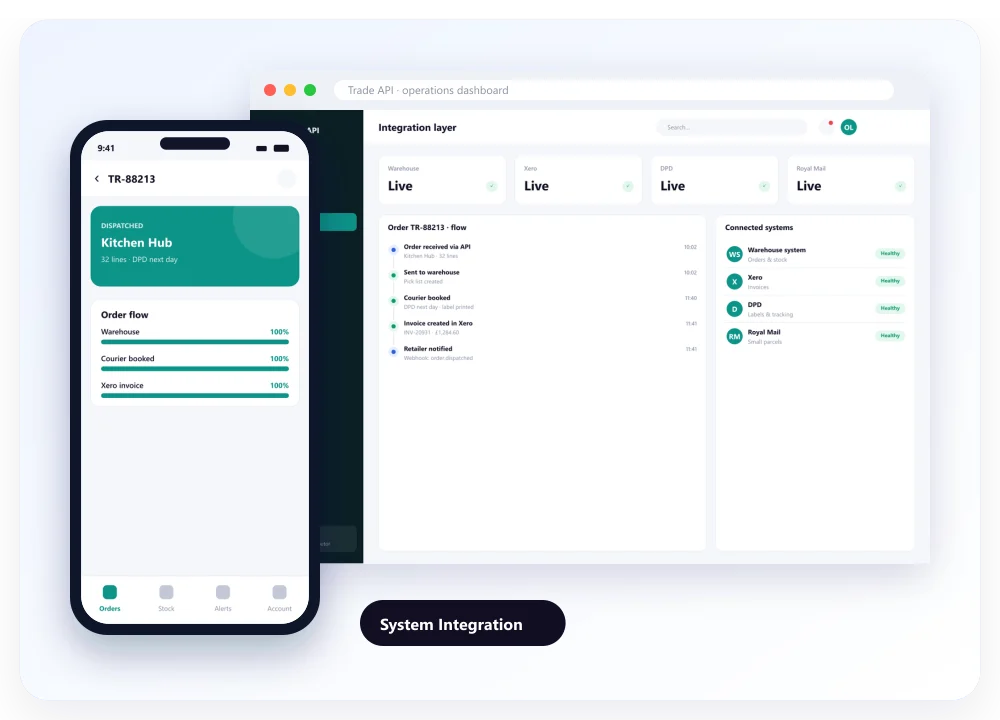
A central integration layer sends each order to the warehouse, books the courier through DPD or Royal Mail and creates the invoice in Xero. Nothing is copied by hand.
Webhooks send dispatch confirmations, tracking numbers and invoices to retailers automatically. A developer portal with clear documentation and a sandbox helps new retailers connect quickly.
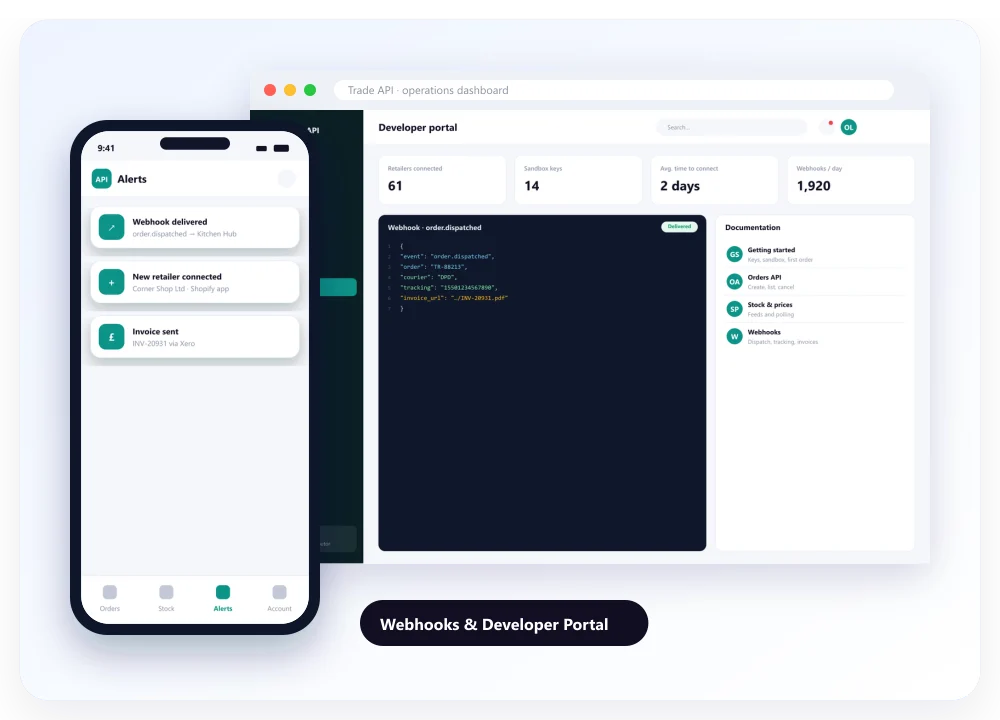
The finished developer portal, API documentation and order dashboard on desktop and mobile.
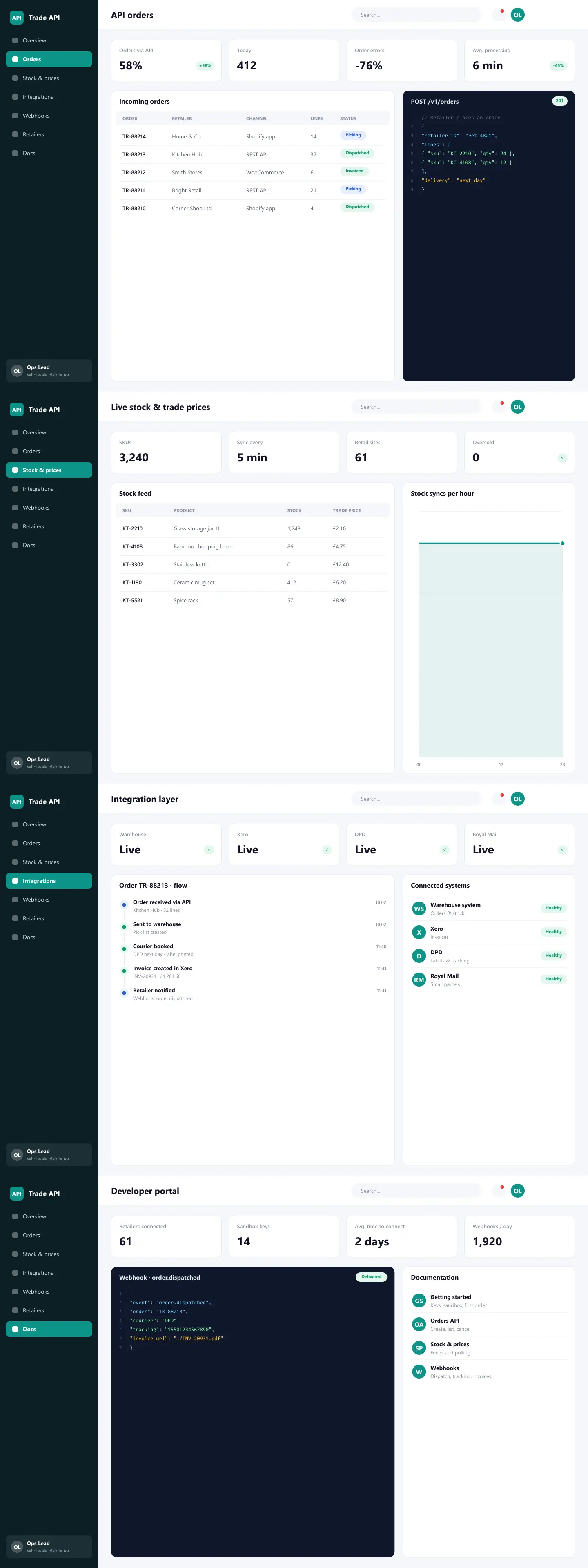
Hover over a screen and scroll through the product screens.
Measured results in the first 90 days after launch.
Trade orders placed automatically through the API and connectors.
Wrong items, quantities or addresses, compared with the previous quarter.
Average time from receiving an order to it being ready for dispatch.
Connecting every system turned a manual, email-driven operation into an automated one. Retailers order whenever they like, stock is always accurate, and the team spends its time picking and packing instead of typing.
“We were typing hundreds of order lines a day from emails and spreadsheets. CodeCrackers connected all our systems and gave our retailers a proper way to order. Orders now arrive automatically, stock is always right, and our team has hours back every day.”
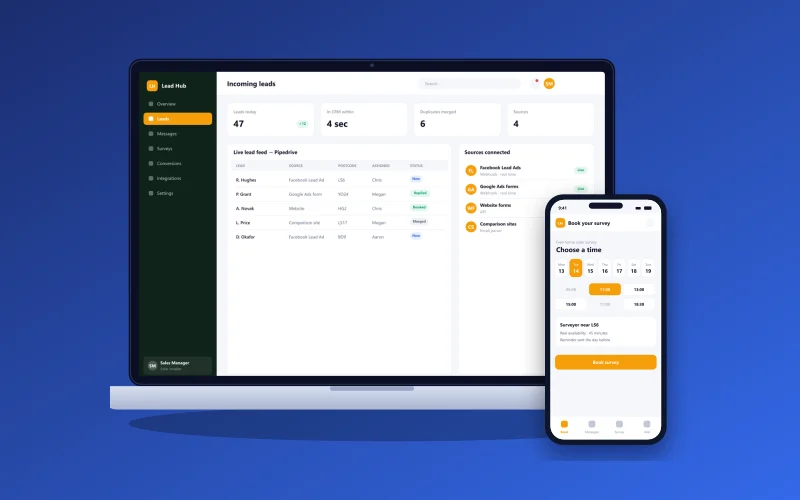
CodeCrackers connected a UK solar installer's ads, website, CRM and surveyor diaries through APIs. Every new lead now lands in the CRM instantly, gets a reply within minutes and can book a survey online. The ad platforms also learn which leads actually become sales.

CodeCrackers built a custom client portal and practice management system for a UK accountancy firm with 650 clients. Documents now arrive in one place, reminders send themselves and every deadline is tracked automatically. That frees the team to focus on advice instead of admin.
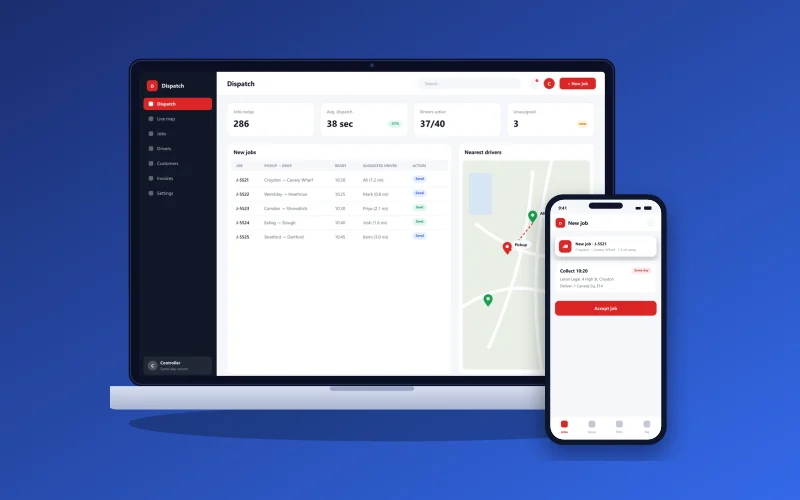
CodeCrackers built a custom real-time dispatch and tracking platform for a UK same-day courier company with 40 drivers. Controllers now see every van live on one screen, customers can track deliveries to the minute, and proof of delivery arrives the moment a parcel is dropped off.


